Vienna Has More Major Homegrown Companies Than All of Slovakia. Crowdberry’s CEO Explains How to Change That
29/10/2026


29/10/2026
Slovakia is owned by foreign investors, and capital is flowing out of the country. According to Daniel Gašpar, Managing Partner at Crowdberry, the solution lies in developing the domestic capital market and supporting mid-sized companies.
Daniel Gašpar has spent the past ten years building an environment in Slovakia for investing in innovative companies. During that time, more than 1,300 projects have passed through the Crowdberry platform, many of which are already successfully expanding beyond Slovakia’s borders.
Today, however, Daniel Gašpar takes a realistic view of the state of the Slovak economy and highlights a structural problem: the absence of a domestic capital market and the limited number of large Slovak-owned companies.
“To some extent, we are filling the gap left by a capital market that does not exist in Slovakia. We are trying to build one, albeit on a very small scale,” explains the Managing Partner of Crowdberry, the strategic partner of the Lepšie Slovensko event.
According to him, company ownership statistics in Slovakia are a warning sign. Of the approximately 700 companies operating in Slovakia with revenues exceeding €50 million, only 160 to 250 are owned by Slovak investors.
“Slovakia has a GDP of €147 billion, and Slovak-owned companies generate around half a billion euros in profit. That is laughable when you look at it in terms of how much capital is returned to domestic owners,” he adds. By way of comparison, he points to Czechia, where domestic entrepreneurs own more than 900 such companies, and Vienna, where there are as many as 600 in a single city.
Although the departure of young talent abroad is often discussed, Gašpar sees an opportunity to bring value back if we create the right conditions. He points to a historical parallel: a hundred years ago, six thousand teachers came from Czechia to teach people in Slovakia to read and write. Today, Slovakia sends a “human capital dividend” to its neighbouring country. But according to the law of conservation of energy, that energy can also find its way back.
In his view, the capital market does not provide a foundation only for fast-growing startups, but above all for small and medium-sized enterprises and family businesses. These are the backbone of the economy.
Unlike countries such as Estonia, Slovakia has not managed to build a so-called unicorn in 30 years, and a startup ecosystem has long been missing here. The way forward for the country is therefore to support the mid-sized business sector and create an environment that keeps companies in Slovakia.
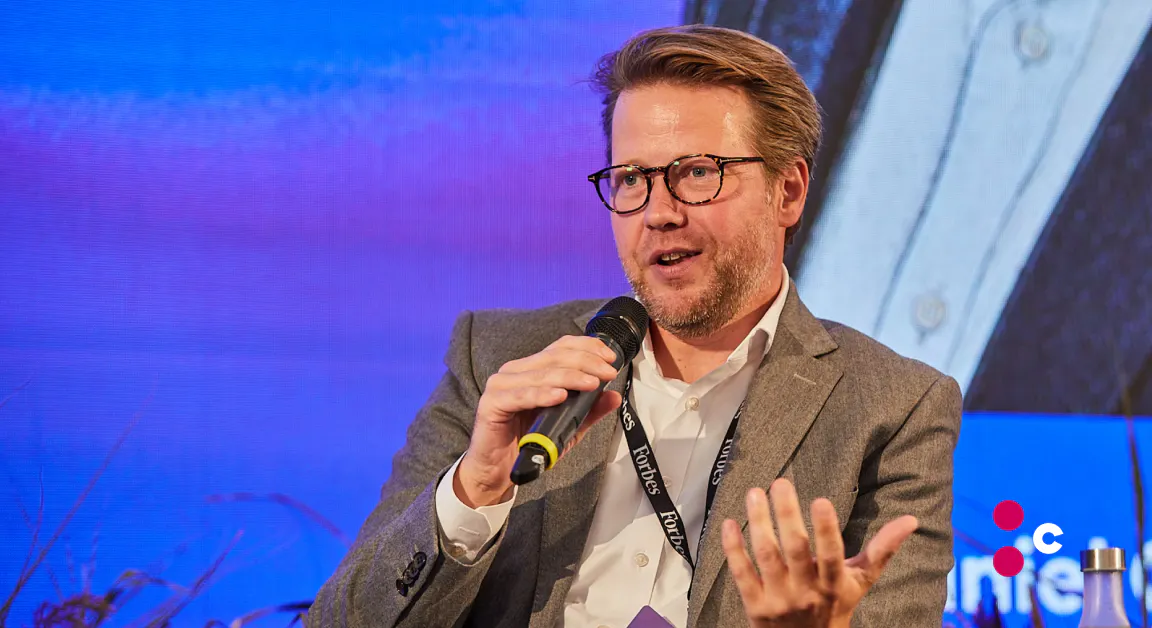
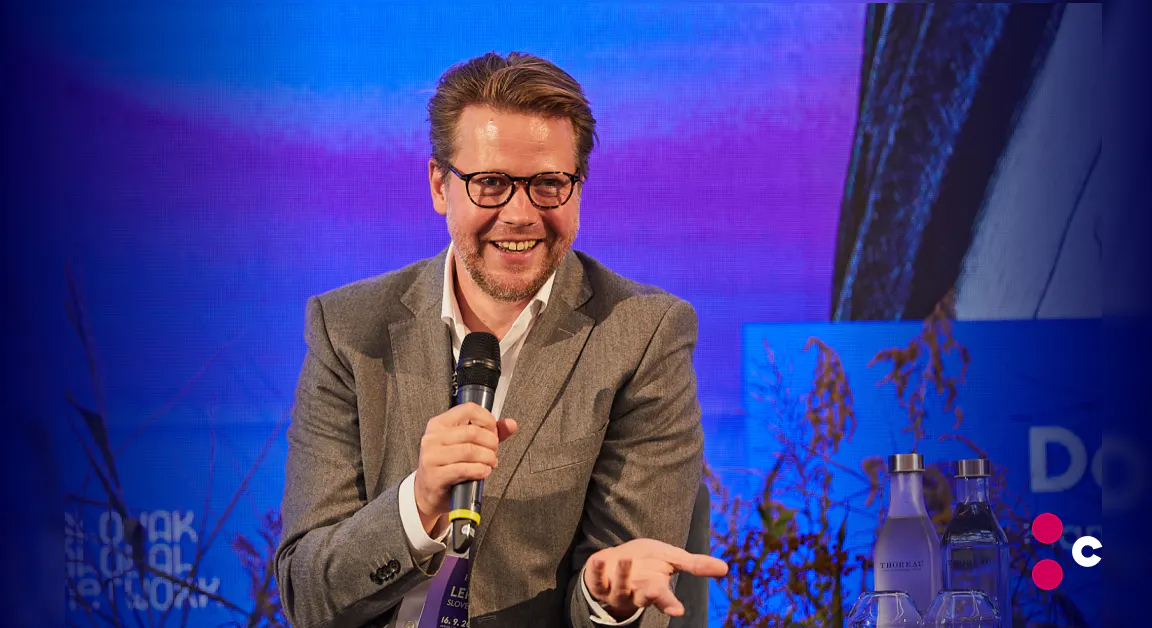
During a panel discussion at the Lepšie Slovensko event, he also revealed what he believes sets apart entrepreneurs who manage to break through internationally, even when they come from a small country. The answer is not a magic formula, but the right mindset, above all ambition.
“Every entrepreneur must have ambition. Some want to get rich, some want to conquer the world, and some want personal fame. We need to accept that and help them develop and fulfil their ambitions,” he emphasises, adding that this quality needs to be nurtured from kindergarten onwards.
A shortage of skilled workers remains a key obstacle to growth for expanding companies. Daniel Gašpar therefore proposes taking inspiration from the Dutch model and attracting both foreign and domestic professionals with incentives such as a 30% tax relief for five years.
In his view, the future of the economy does not lie in relying on more carmakers arriving or on state subsidies, but in developing sectors where we have a natural advantage: logistics, energy and tourism. Change, however, starts with each individual and their interest in the world around them.
“What matters most is that we care about Slovakia. Take an interest in Slovakia, especially over the next 12 to 18 months. We need it to receive more of your energy than it has over the past decade,” Gašpar concluded.
Source: Forbes Slovensko