Slovak patent brings (r)evolution to the construction industry that reduces costs and emissions
26/11/2024

After the success of an innovative Slovak technology that uses cigarette butts as an additive in asphalt, another Slovak company, Terratico, arrives with its patented solution in the field of sustainable building materials.
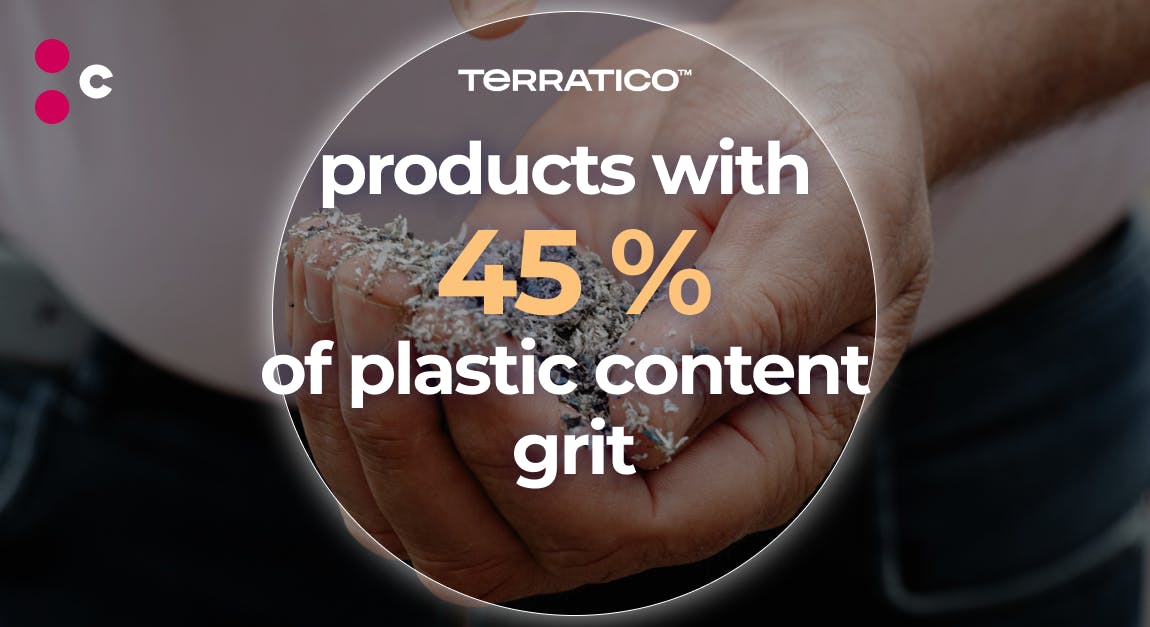
Lightweight eco-concrete with up to 45% plastic waste in the mix provides an innovative solution for the construction industry. Thanks to its unique properties, the eco-concrete can help reduce emissions, save costs and use materials more efficiently. Terratico's patented technology has already caught on not only in the European market, but also penetrated the US, where it is attracting interest from construction companies and investors.
Builders are changing the world through innovation
Terratico was founded by a father-and-son team with more than 25 years of experience in the building materials industry and their desire to solve the problem of excess plastics. The idea of using plastic recyclate in concrete has long been known in the construction industry, but the Nagys had a vision to use it as a replacement for crushed marble in terrazzo and concrete. After two years of research and development, the first version of the material was created, which the company has since continuously improved and which is still a unique global product.
The Nagys achieved their first commercial success in 2021, when they made 100 benches from shredded credit cards for a Slovak bank. Outside of Slovakia, the company has gained attention not only in Europe, but also in the US, where its material is planned to be used commercially by developers, architects and cities, especially in the form of urban furniture.
Patented technology that combines design and sustainability
Terratico has developed an eco-friendly alternative to concrete and terrazzo that is ideal for modern construction. Its innovative solution involves the cold incorporation of up to 45% plastic grit into the concrete mix, creating a material with unique properties. The process distributes the plastic particles evenly throughout the mix structure, they do not float to the surface and they adhere firmly to the concrete.